





An upcut saw is a crosscutting machine in which the blade travels upward through the workpiece from below the table, rather than dropping down onto it. This cutting motion produces cleaner cuts with less tear-out, allows the blade to retract safely below the table between cycles, and makes upcut saws a go-to choice for high-volume trimming, defecting, and cut-to-length operations in woodworking and millwork shops.
If you're weighing an upcut saw against a cut-off saw, radial arm saw, or chop saw for your shop floor, here's what you need to know.
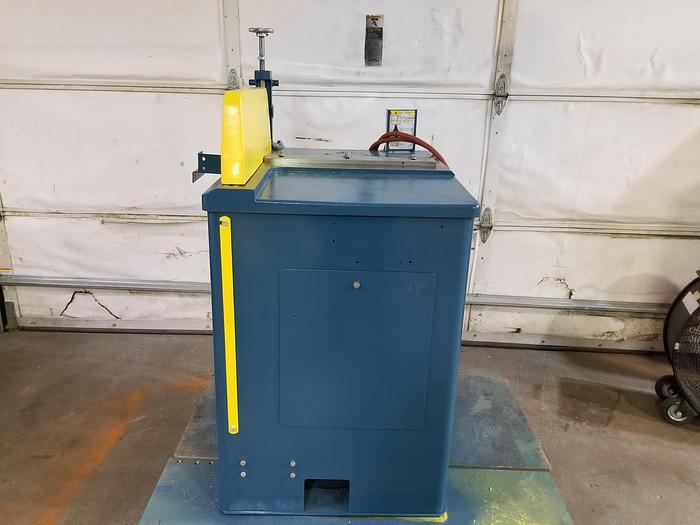
What Is an Upcut Saw?
An upcut saw is a stationary crosscut saw built around a simple but effective idea: the blade sits below the table and swings or slides up through the stock to make the cut, then retracts back down out of the way. This is the opposite of a chop saw or standard cut-off saw, where the blade travels downward into the material.
That upward cutting motion has a direct effect on cut quality — it drives wood fibers down into the material instead of tearing them upward, which is one reason upcut saws are so common in moulding shops and millwork operations where a clean, splinter-free face cut matters.
Upcut saws are often confused with radial arm saws and general cut-off saws, but the blade geometry and motion set them apart — more on that comparison below.
Key Benefits of Upcut Saws
1. Cleaner Cuts, Less Tear-Out
Because the blade enters from underneath, tear-out is pushed into the waste side of the cut rather than the visible face. For moulding, trim, and any finish-grade crosscutting, that means less sanding and fewer rejected parts.
2. Faster Cycle Times
Upcut saws are built for repetition. Pneumatic and NC-controlled models can cycle quickly, which makes them a strong fit for shops running high volumes of identical or near-identical cuts.
3. A Safer Cutting Motion
Between cuts, the blade retracts fully below the table, keeping it out of the operator's working area. Combined with hold-down clamps and guarding on most production models, this design reduces exposure compared to some sliding or chop-style configurations.
4. Built for Optimizing and Defecting Lines
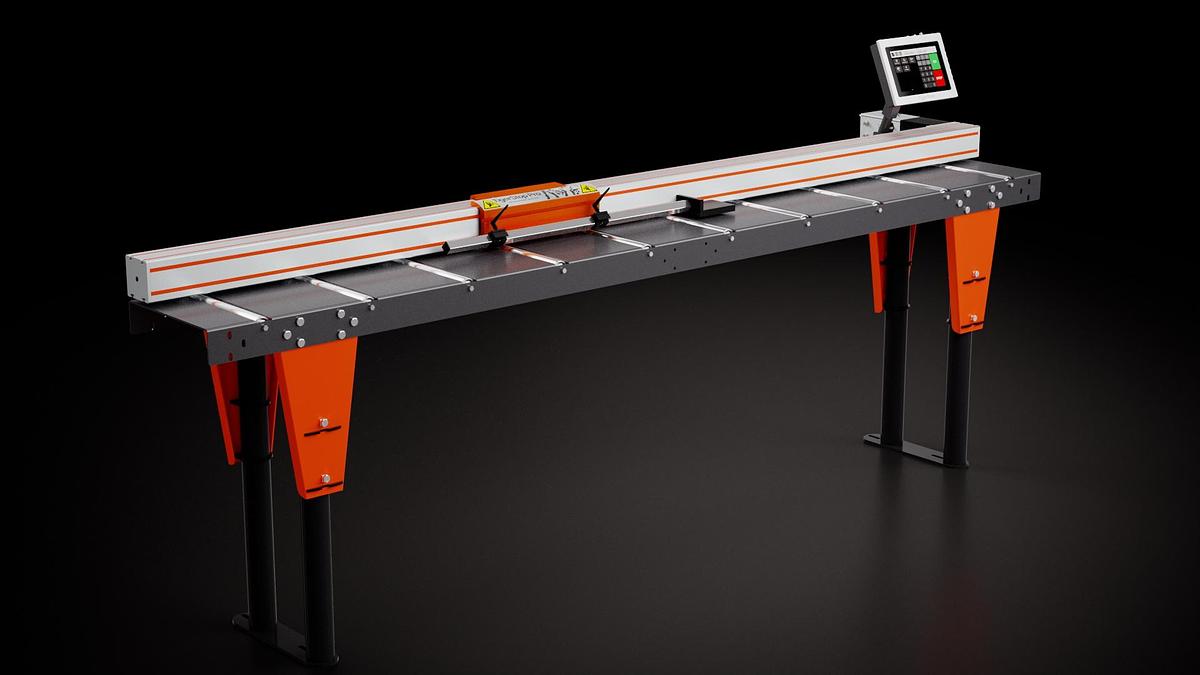
Upcut saws integrate naturally with scanning and length-optimizing systems. Pair one with a digital measuring and positioning system like TigerStop and you get accurate, repeatable cut-to-length production with minimal operator input — a major throughput gain over hand-measured cutting.
5. Lower Kickback Risk
The upward, controlled cutting action and typical clamping setups reduce the kickback risk associated with feeding stock into a blade horizontally.
6. Durability and Manageable Maintenance
Upcut saws are mechanically straightforward — a motor, an arbor, and a pivot or slide mechanism. That simplicity translates to fewer wear points and more predictable maintenance costs over the life of the machine.
Common Applications
- Moulding and millwork trim — cutting profiled stock to finished length without tear-out
- Cabinet and component shops — repetitive cut-to-length for parts and blanks
- Pallet and dimensional lumber production — fast, rugged crosscutting
- Defect-out and rip line integration — removing knots and defects before further processing
Upcut Saw vs. Other Saw Types
Upcut Saw
- Blade motion: Rises from below
- Cut quality on face grain: Excellent (fiber pushed down)
- Best for: High-volume, repetitive crosscuts
- Automation potential: High — pairs well with optimizers
- Typical shop use: Moulding, millwork, defecting lines
Cut-Off Saw
- Blade motion: Drops from above
- Cut quality on face grain: Good
- Best for: General-purpose crosscutting
- Automation potential: Moderate
- Typical shop use: General fabrication
Radial Arm Saw
- Blade motion: Pulled across horizontally
- Cut quality on face grain: Good
- Best for: Flexible manual crosscutting, dadoing
- Automation potential: Moderate
- Typical shop use: Job shops, mixed-use cutting
Browse our full lineup of industrial saws and cut-off saws to compare options side by side.
What to Look for When Buying an Upcut Saw
- Motor HP and voltage — match to your material thickness, hardness, and duty cycle (common configurations run 5–15+ HP on 230V or 480V, 3-phase).
- Blade size and stock capacity — check maximum width and thickness capacity against your typical stock. As a reference point, our recently refurbished Whirlwind 212R upcut saw was built for a 4" x 10" stock capacity with an 18" blade and a 10HP, 3-phase motor — a solid benchmark for mid-size production shops.
- Manual vs. pneumatic vs. NC-controlled — manual trigger saws suit lower volumes; pneumatic and NC/automatic models suit production environments.
- New vs. reconditioned — a well-reconditioned upcut saw can deliver production-grade performance at a fraction of new-machine cost.
- Integration potential — confirm compatibility with any existing or planned optimizing/measuring systems.
Why Buy Your Upcut Saw from John G. Weber
John G. Weber has spent decades supplying woodworking and metalworking shops with both new and used machinery — not just selling equipment, but standing behind it. When you buy an upcut saw from us, you get:
- Access to trusted brands across a wide range of price points
- In-house repair, rebuild, and upgrade services to keep your machine running for years
- Straightforward, honest guidance on what machine actually fits your production needs — new, used, or reconditioned
Frequently Asked Questions
What is the difference between an upcut saw and a cut-off saw? An upcut saw's blade rises from below the table through the stock, while a standard cut-off saw's blade drops down onto the stock from above. The upcut motion typically produces a cleaner face cut with less tear-out.
Is an upcut saw safer than a chop saw? Upcut saws generally offer a safer cutting motion because the blade retracts below the table between cuts, keeping it out of the operator's path, and most production models include hold-down clamping and guarding.
What horsepower motor do I need for an upcut saw? It depends on your material and duty cycle, but common shop configurations run between 5 and 15+ HP on 230V or 480V three-phase power. Heavier stock and higher-volume cutting call for higher HP.
Can an upcut saw be automated? Yes. Many upcut saws are built or retrofitted for pneumatic or NC control and pair well with digital measuring systems like TigerStop for automated, optimized cut-to-length production.
How much does an upcut saw cost, new vs. used? New industrial upcut saws can run well into five figures depending on automation level, while reconditioned or used models often deliver strong production value at a significantly lower cost. Contact us for current pricing and availability.
Ready to Upgrade Your Crosscutting Operation?
Whether you're outfitting a moulding shop, upgrading a production line line, or just replacing an aging saw, our team can help you find the right upcut saw for your production needs.